
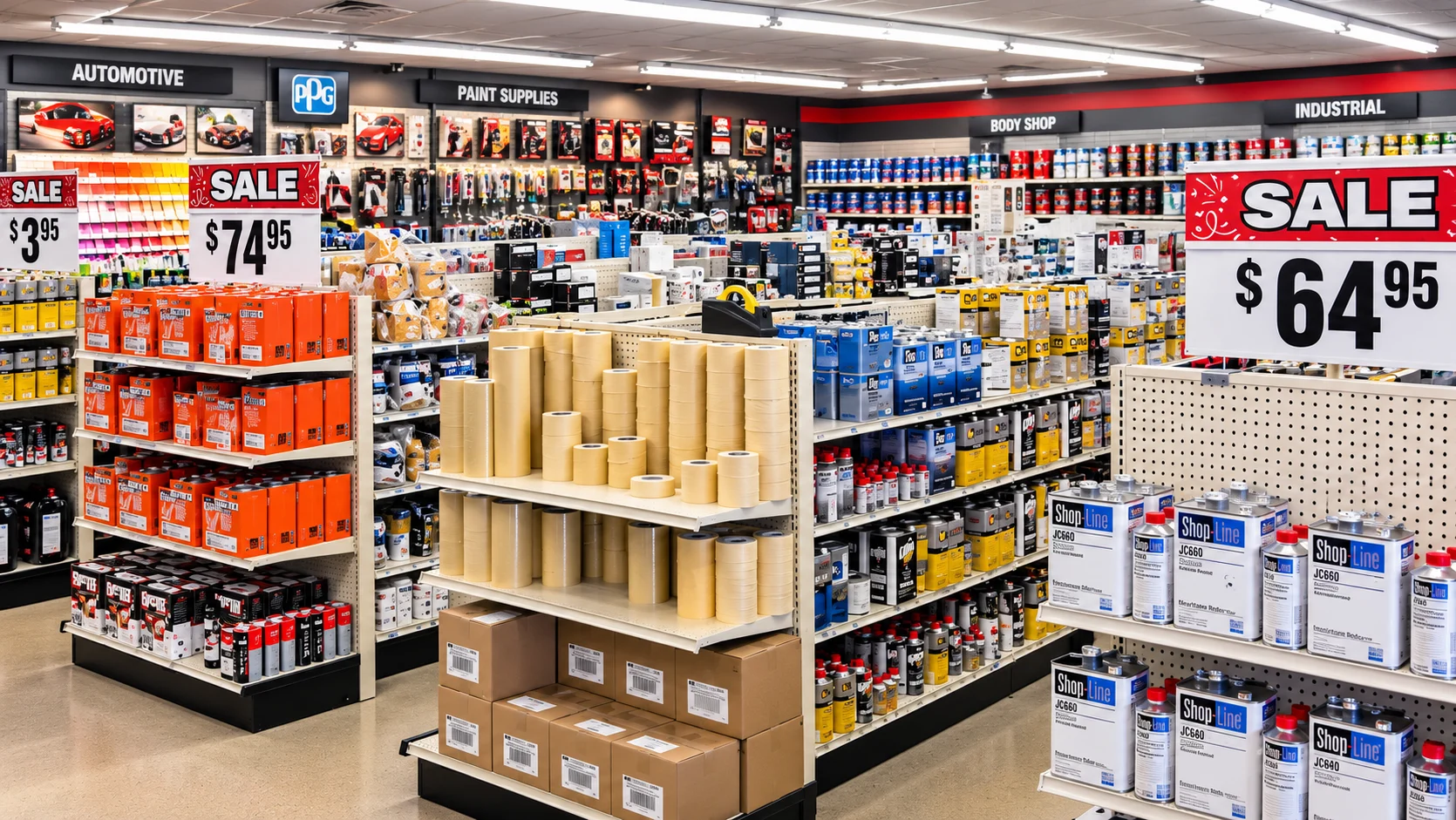
Tip or nozzle size must be matched to the gun, coating, viscosity and manufacturer guidance. There is no single size that responsibly fits every primer, basecoat, clear or industrial coating.
The short answer
There is no responsible universal spray-gun tip size for every primer, basecoat, clear, single-stage paint or industrial coating. Tip or nozzle choice depends on the gun design, coating viscosity, solids, desired finish, project size, available air and the exact manufacturer instructions. A number that works for one material may produce poor atomization, excessive overspray or an unsafe process with another.
Think of the tip as one part of an application system. The gun body, nozzle set, air cap, regulator, hose, compressor, filtration, material preparation and operator technique all affect the result. Start with the coating’s current technical data and the gun maker’s guidance, then verify the setup on a suitable test surface.
Match the tip to the material
A thin color material generally needs a different atomization approach than a high-build surfacer or a heavier industrial coating. Primer may need enough passage and atomization to lay down a useful film, while a basecoat or clear may be judged more heavily on control, appearance and transfer. Architectural and industrial coatings can vary widely, so their label and technical documentation should lead the decision.
Viscosity is not a fixed identity. Temperature, mixing, reduction where permitted, age and agitation can change how a material moves. Never thin or alter a coating simply to make it pass through a preferred tip. Use only the components and ratios permitted by the selected system, and confirm compatibility before putting material into the gun.
Project size and finish expectations
A small repair and a complete vehicle place different demands on control, cup capacity, refilling and consistency. A furniture or cabinet project may prioritize manageable handling and a controlled finish, while a large industrial job may prioritize production, coverage and a different application category. The same gun can be a sensible choice in one workflow and frustrating in another.
Desired appearance matters as well. Show-sensitive automotive work often rewards repeatable atomization and careful inspection. A working component may prioritize a durable, appropriate film and efficient coverage. Define what “good” means before choosing hardware, because a tip selected only for speed may not support the finish expectation.
Air supply and supporting equipment
The compressor must support the gun’s actual demand while maintaining stable, clean air. Look at the equipment documentation rather than relying only on tank size. Hose diameter and length, fittings, regulators, moisture separation and filtration can change what reaches the gun. Water or oil contamination can create defects that look like a color or technique problem.
A pressure reading at the compressor is not necessarily the same as the pressure at the gun during spraying. Exact pressure and setup instructions belong to the gun and coating manufacturers. Inspect seals, cups, passages and air caps, and clean the equipment according to its instructions. A partially blocked cap can change the pattern even when the selected tip is technically appropriate.
Test pattern and observation
Before spraying the project, test the pattern and material flow on an appropriate card or prepared test surface. Look for an even fan, consistent atomization, controlled wetness and a pattern that suits the intended overlap. A dry, rough deposit may indicate insufficient material or unsuitable conditions; a heavy center, tails or excessive wetness may point to a setup or technique issue.
Change only one variable at a time and record what changed. Do not chase a defect by adjusting pressure, distance, reduction and tip all at once. If the material does not behave within the published setup range, stop and ask whether the gun, product, air supply or environment is the wrong match. Testing is not permission to exceed the manufacturer’s limits.
Safety and compatibility
Spraying creates inhalation, skin, fire, overspray and waste hazards that depend on the coating and workplace. Use the selected product’s safety information, suitable ventilation, required respiratory and personal protection, and an appropriate work area. A gun tip cannot make an unsafe coating safe. Do not spray unknown materials or use a casual outdoor setup for products that require controlled handling.
Do not assume products from different brands belong together. The coating, reducer, activator, primer, clear and cleaning materials should be treated as a complete verified system. Exact mix, pot life, flash, recoat and cure requirements must come from current documentation, not from a generic tip-size chart.
What to bring when choosing a setup
Bring the exact product name and technical data if available, the gun make and model, nozzle or tip components, compressor information, hose and filtration details, project size, finish goal and your application experience. Photos of the current setup can make an equipment conversation more concrete. If you are comparing options, say whether the work is a panel, full vehicle, furniture, cabinetry, machinery or a larger commercial project.
D&S can help organize the questions, but the final setup must be verified against the current product and equipment instructions. Dry Colorado air, wind, dust, temperature and local elevation can interact with spraying conditions; none justifies a fixed adjustment that ignores the system. Test safely, document the result and seek qualified help when the coating or workplace is not understood.
A practical sequence
- 01
Define the project before selecting a product. Describe whether this is a repair, full repaint, restoration, exterior maintenance job or industrial item, and identify what area is actually included.
- 02
Inspect the existing surface in useful light. Record substrate, coating condition, contamination, repairs, moisture, corrosion, texture and any unknown layers. Photos are helpful, but a physical sample can answer questions a screen cannot.
- 03
Choose the system as a group. Preparation, primer or sealer, color or topcoat, clear where applicable, reducer or activator and application equipment must be compatible. Current manufacturer technical information controls exact mix, recoat, cure and safety details.
- 04
Test the plan before committing when color, effect, adhesion or finish is sensitive. A small prepared area or spray-out can reveal coverage, orientation, sheen and transitions while changes are still manageable.
- 05
Document what worked. Keep labels, color information, batch or formula notes, application observations and the conditions. A future repair is easier when the next person has evidence instead of a guess.
Common mistakes
- Buying a color before checking the substrate and existing coating.
- Treating a code, color name or internet photo as proof of a final visual match.
- Assuming one primer, reducer, nozzle or coat count fits every product.
- Applying over peeling, contaminated, damp or unknown material.
- Rushing the final inspection because the surface looks dry.
Professional considerations
Compare gun category, nozzle set, available air, filtration, hose and operator technique as a group. A setup that works for one product may not atomize another. Test pattern and material flow on a suitable card before the project.
Professionals also protect the next decision. They keep labels and project notes, test a small area when the result is sensitive, and stop when the substrate or material is not understood. If the work involves hazardous coatings, poor ventilation, unknown contamination or a condition outside the product data, get qualified help rather than improvising.
What to bring to D&S
- Exact coating and technical data
- Gun make and nozzle components
- Compressor and filtration information
- Project size and desired finish
- Current setup or photos
Pueblo / Southern Colorado consideration
Dry, dusty air makes filtration and work-area control important. Local altitude and temperature can interact with setup, so verify any adjustment with the equipment and product documentation.
Local context is useful, but it does not override the selected product’s technical data or safety information. Conditions should be observed on the actual day and surface, especially when wind, dust, sun, temperature or low humidity can change the work.
Frequently asked questions
Can I use this guide as a product specification?
No. It is a planning guide. The current technical data and safety information for the exact product and use control the work.
What if I do not know what is already on the surface?
Say that clearly. Unknown layers are important information; a small test and an in-person evaluation are safer than assuming compatibility.
Does weather change the plan?
Yes. Temperature, wind, dust, humidity and surface condition can change application and cure. Use the selected system’s limits and ask D&S when conditions are uncertain.
Published by D&S Paint Center, Inc. · © 2026 D&S Paint Center. All rights reserved.
Bring the project to D&S.
Bring the photos, product labels, dimensions or physical sample relevant to this question. The Pueblo counter can help discuss a practical next step.